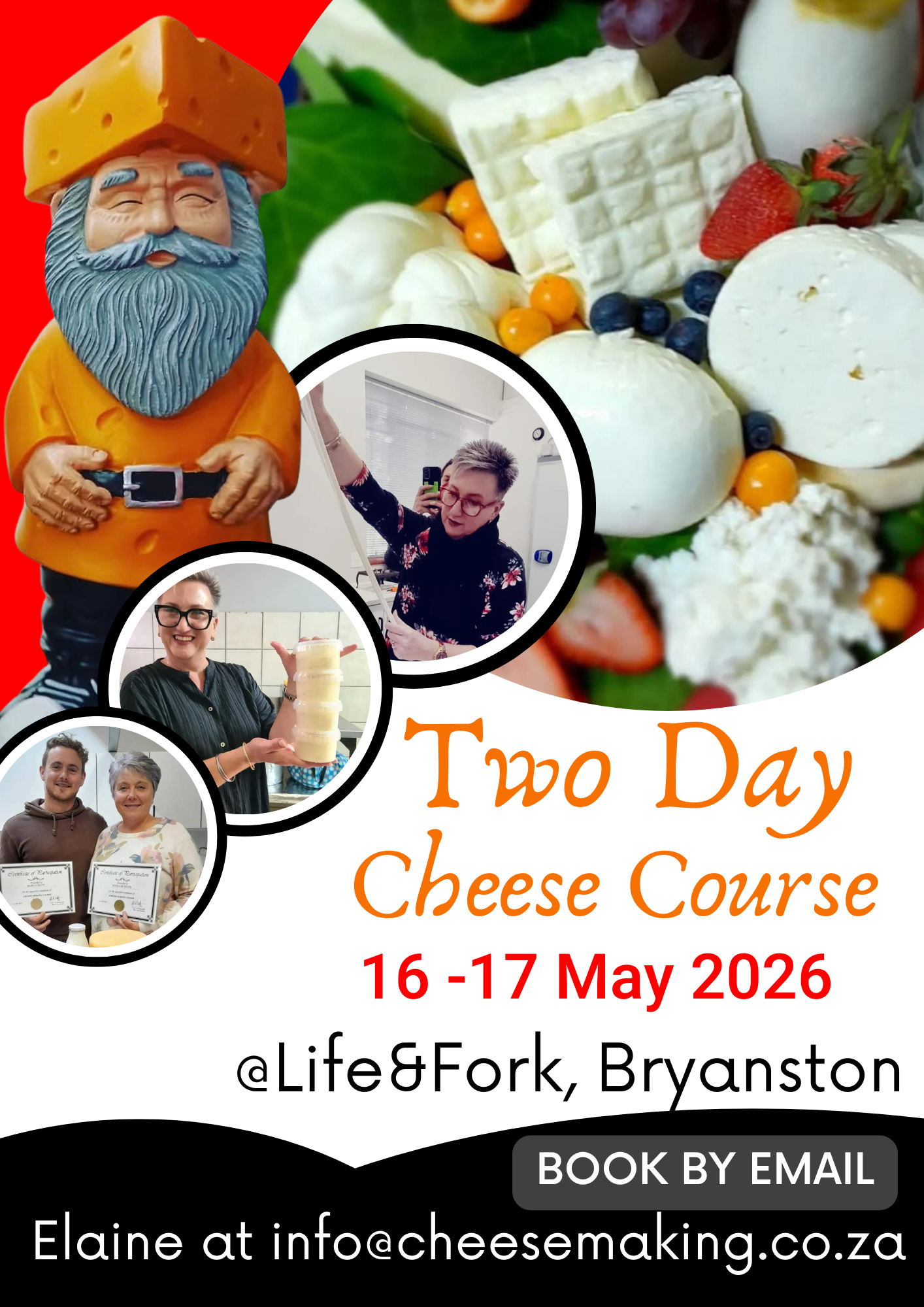
Cheese Making Course South Africa

Cheese Making Course South Africa – Learn the Art of Artisan Cheese

Interest in artisan food production is growing rapidly, and many people are now searching for a cheese making course South Africa to learn how to turn fresh milk into delicious handmade cheese. Whether you are a home cook, a food enthusiast, or a farmer looking to add value to your milk, attending a professional cheese workshop is one of the best ways to learn the craft.

A hands-on cheese making workshop South Africa allows participants to understand the science and art of cheesemaking while working directly with milk, cultures, and rennet. These practical courses teach everything from the basics of curd formation to the techniques used to produce traditional cheeses like mozzarella, feta, and halloumi.


Cheese Making Course Cape Town

For those living in the Western Cape, a cheese making course Cape Town offers a fantastic opportunity to learn the craft in a relaxed and enjoyable setting. Many participants searching online for a cheese making course near me discover that Cape Town workshops provide both a memorable experience and valuable food production skills.

A typical cheese making workshop Cape Town includes step-by-step demonstrations and hands-on participation. Students learn how milk transforms into curds, how to cut and cook the curd, and how salt and aging influence flavor and texture.

These courses are ideal for beginners but also provide insights useful for people interested in small-scale or artisan cheese production.


Cheese Making Classes South Africa

Across the country, interest in cheese making classes South Africa continues to grow as more people seek natural and locally produced foods. Cheese workshops provide a fun, interactive environment where participants can learn practical skills while gaining an understanding of the science behind cheese production.

In a professional learn cheese making course, students typically explore topics such as:

  • milk composition and quality
  • starter cultures and fermentation
  • rennet and coagulation
  • curd cutting and whey drainage
  • salting and brining techniques
  • cheese storage and aging

Understanding these fundamentals helps participants produce consistent and high-quality cheese at home.


Artisan Cheese Making Course

An artisan cheese making course focuses on traditional methods used by small producers around the world. Participants learn how to craft cheeses with distinctive textures and flavors while using simple equipment that can easily be used at home or on a small farm.

Typical cheeses covered in an artisan course include:

  • Mozzarella
  • Feta
  • Halloumi
  • Ricotta
  • Gouda

These cheeses are excellent starting points because they are relatively simple to produce while demonstrating the essential techniques of cheesemaking.


Cheese Making Short Course for Beginners

A cheese making short course is perfect for beginners who want to learn the fundamentals in a single day or weekend workshop. These short courses focus on practical techniques that allow participants to start making cheese immediately after completing the training.

Many people who attend a short course later continue their learning through a more advanced cheese making training course, which may explore:

  • advanced starter cultures
  • milk chemistry and pH control
  • cheese yield optimization
  • aging and maturation techniques
  • small-scale commercial production

For those interested in starting a small dairy business, these advanced courses can provide valuable insight into the technical aspects of professional cheesemaking.


Why Take a Cheese Making Training Course?

Participating in a cheese making training course offers many benefits. It allows you to gain hands-on experience, learn directly from experienced cheesemakers, and understand the key factors that determine cheese quality.

Some of the main benefits include:

• learning professional cheesemaking techniques
• understanding the science behind milk fermentation
• producing your own fresh cheeses at home
• gaining skills that can support small food businesses
• experiencing a unique and enjoyable culinary activity

For many people, cheesemaking quickly becomes a rewarding hobby that combines science, craftsmanship, and great food.


Find a Cheese Making Course Near You

If you have ever searched online for a cheese making course near me, you are not alone. Interest in artisan cheesemaking is increasing across South Africa as more people discover the joy of making their own dairy products.

Whether you join a cheese making workshop South Africa, attend a cheese making course Cape Town, or enroll in an artisan cheese making course, the experience offers a fascinating introduction to one of the world’s oldest food traditions.

Learning how to transform milk into cheese is both educational and deeply satisfying. With the right guidance and a well-structured cheese making short course, anyone can begin their journey into the world of handmade cheese. 🧀

how to make mozzarella
cheese cultures South Africa
rennet South Africa
feta recipe
cheese making course South Africa
cheese starter culture
cheese brine recipe
cheese yield calculation

Cheese Making Course South Africa Read More »

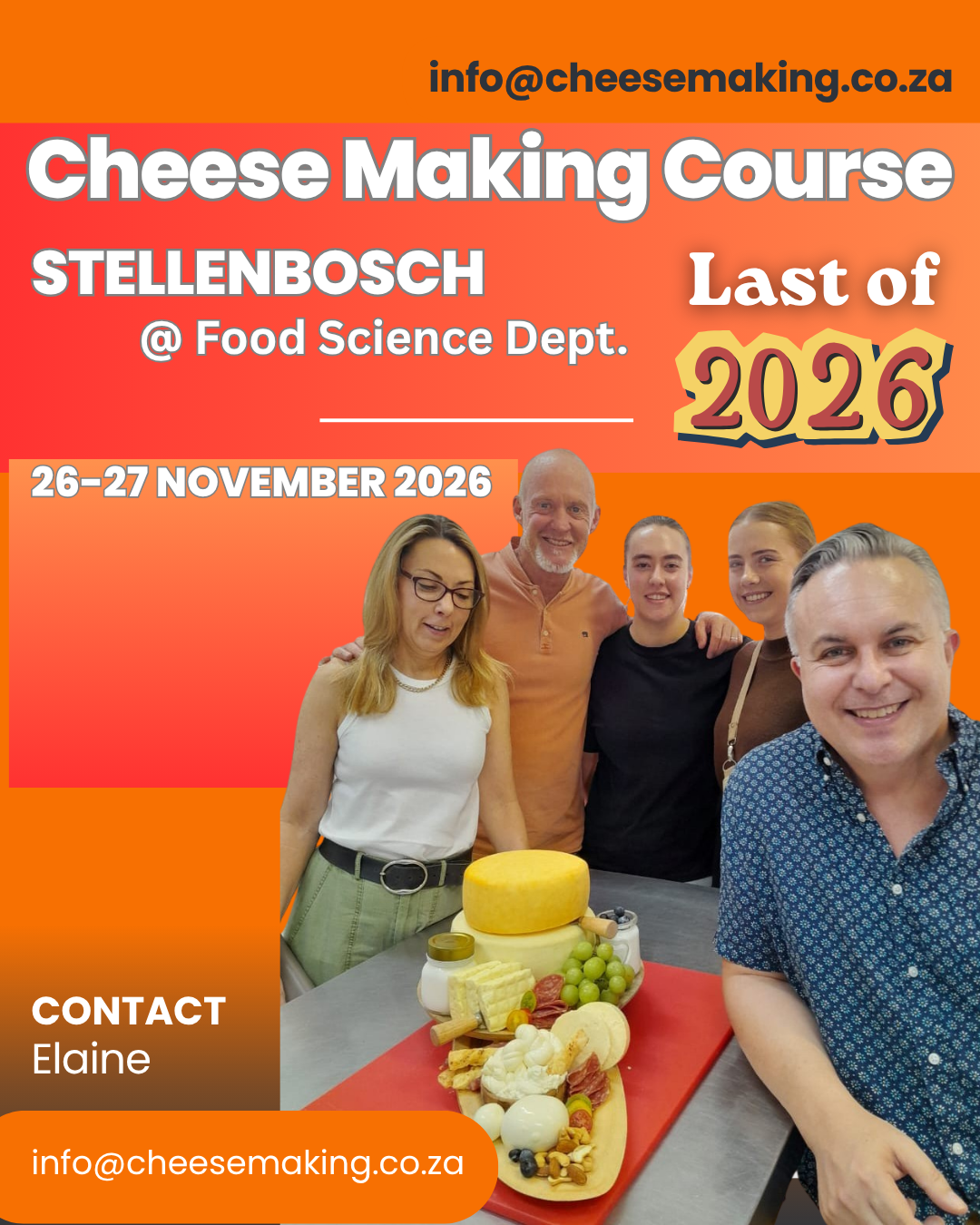
26-27 March 2026 Cheese Making Course in Stellenbosch

26-27 March 2026 Cheese Making Course in Stellenbosch

For info and to book: info@cheesemaking.co.za

Buy cheese-making kits and ingredients: https://cheesemaking.co.za/shop

cheese making course cape town
cheese making course stellenbosch

professional cheese making course
commercial cheese making course
cheese making training for dairy farmers
artisan cheese business course
cheese production training
small scale cheese production course

26-27 March 2026 Cheese Making Course in Stellenbosch Read More »

LifeandFork.co.za

lifeandfork.co.za

When we present our cheese making courses in Bryanston we make use of the venue and fantastic catering of Life and Fork. We always get fantastic reviews from the course attendees on the food that Kathy presents.

Please support them. They are great for an emergency, or to send some meals to loved ones, but their real value is in long term dietary commitment and is an investment in your health. Try them today. Eat well – feel well

Read their FAQ’s

Check their MENU

Contact them with your request to see if they can help.

  • Sandhurst – frozen healthy and delicious prepared meals for delivery or pick-up in Bryanston
  • Hyde Park – frozen healthy and delicious prepared meals for delivery or pick-up in Bryanston
  • Hurlingham – frozen healthy and delicious prepared meals for delivery or pick-up in Bryanston
  • Morningside – frozen healthy and delicious prepared meals for delivery or pick-up in Bryanston
  • River Club – frozen healthy and delicious prepared meals for delivery or pick-up in Bryanston
  • Dainfern – frozen healthy and delicious prepared meals for delivery or pick-up in Bryanston
  • Lonehill – frozen healthy and delicious prepared meals for delivery or pick-up in Bryanston
  • Parkhurst – frozen healthy and delicious prepared meals for delivery or pick-up in Bryanston
  • Rosebank – frozen healthy and delicious prepared meals for delivery or pick-up in Bryanston
  • Craighall Park – frozen healthy and delicious prepared meals for delivery or pick-up in Bryanston
  • frozen prepared meals rivonia johannesburg 
  • frozen prepared meals fourways johannesburg 
  • frozen prepared meals illovo johannesburg 
  • frozen prepared meals parktown north johannesburg 
  • frozen prepared meals sunninghill johannesburg 
  • frozen prepared meals woodmead johannesburg 
  • frozen prepared meals blairgowrie johannesburg 
  • frozen prepared meals houghton johannesburg 
  • frozen prepared meals randburg johannesburg 
  • frozen prepared meals sandown johannesburg 
  • frozen prepared meals beaulieu johannesburg 
  • frozen prepared meals ferndale johannesburg 
  • frozen prepared meals linden johannesburg 

LifeandFork.co.za Read More »

Gorgonzola Cheese

The Making of Italian Gorgonzola Cheese

Introduction

Gorgonzola cheese, renowned for its creamy texture and bold flavor, stands as a testament to Italy’s rich culinary heritage. This beloved blue cheese has been crafted for centuries, adhering to traditional methods that have been refined and protected over generations. With its production limited to two Italian regions, Gorgonzola has earned the European Union’s Protected Designation of Origin (PDO) status, ensuring its authenticity and quality on a global stage.

History and Regional Significance

Gorgonzola cheese’s origins date back to the small town of Gorgonzola in northern Italy. Over the centuries, this cheese has become a staple in Italian cuisine and a favorite worldwide. Its production today is confined to Lombardy and Piedmont, the only regions authorized to make it. These areas boast a rich history of cheesemaking, and their climate and soil contribute to the unique flavor profile of Gorgonzola.

The cheese’s economic importance is significant, with the industry generating over €800 million annually. Approximately 5 million wheels of Gorgonzola are produced each year, making it a key export for Italy. Despite its global popularity, production remains a highly localized and artisanal process.

Production Process: From Milk to Marbled Perfection

Ingredients

The foundation of Gorgonzola is unskimmed, pasteurized cow’s milk. The cheese owes its iconic marbling to Penicillium roqueforti, a fungus added during the early stages of production. This ingredient, along with enzymes, rennet, and yeasts, creates the ideal environment for the cheese’s texture and flavor to develop.

Curdling and Molding

Milk is curdled in large cauldrons where it begins to transform. Within about 20 minutes, the curd reaches the right consistency and is transferred into molds. Each mold is marked with a unique identification number corresponding to the dairy that produced it. This ensures traceability and compliance with PDO standards.

Turning, Salting, and Resting

The molds are turned four times to help the curd settle evenly. The wheels then rest overnight before being salted multiple times to enhance flavor and preserve the cheese. At this stage, the wheels weigh approximately 18 kilograms (40 pounds). Throughout the aging process, they lose about 6 kilograms (13 pounds) as excess whey is released.

Puncturing and Aging

A pivotal step in Gorgonzola production is the puncturing of the wheels. Each wheel is pierced about 100 times per side using a machine (or by hand in smaller dairies) to introduce oxygen. This process activates the Penicillium roqueforti, allowing the blue or green veins to develop.

Aging takes place in carefully controlled environments. Mild Gorgonzola, known as Dolce, is aged for at least two months, while the more pungent Piccante variety requires three months. The aging process determines the cheese’s texture and flavor intensity.

Types of Gorgonzola

Gorgonzola comes in two main varieties, each with distinct characteristics:

  1. Gorgonzola Dolce: This variety is creamy, soft, and milder in flavor. Its veins are typically blue, reflecting its shorter aging time.
  2. Gorgonzola Piccante: A harder, more crumbly cheese with a robust, pungent taste. The veins in this variety are green, developed over a longer aging period.

The Role of PDO Certification

The PDO designation ensures that every wheel of Gorgonzola adheres to strict production criteria:

  • Geographical Restriction: Only cheeses made in Lombardy and Piedmont can be called Gorgonzola.
  • Authenticity: Each wheel is wrapped in a signature aluminum foil for easy identification.
  • Quality Assurance: Regular inspections and quality checks guarantee consistency and maintain the cheese’s reputation worldwide.

This certification not only preserves the heritage of Gorgonzola but also protects it from imitation.

Culinary Versatility

Gorgonzola’s bold flavor and creamy texture make it a versatile ingredient in the kitchen. It pairs beautifully with fruits like pears and apples, as well as nuts and honey. It is also used in sauces, pastas, and risottos, adding a luxurious depth of flavor.

In the video, a chef showcased Gorgonzola’s adaptability by preparing squid ink spaghetti with both Dolce and Piccante varieties. The dish highlighted how the cheese’s creamy and robust characteristics complement complex flavors, creating a visually stunning and delicious meal.

Unique Features of Gorgonzola Production

  1. Traditional Techniques: Despite technological advancements, Gorgonzola production retains its artisanal roots. Machines are designed to mimic the gentle movements of human hands, ensuring the curd is handled delicately.
  2. Distinctive Aging Rooms: The warm, humid salting rooms foster the activity of yeasts, while cooler aging rooms allow the cheese to mature at the perfect pace.
  3. Daily Production Scale: At Caseificio Si Invernizzi, one of the dairies featured, 450–500 wheels of Gorgonzola are produced each day, showcasing the balance between scale and quality.

Economic and Cultural Impact

The Gorgonzola industry supports local economies and enhances Italy’s global culinary reputation. It embodies a blend of tradition, innovation, and passion, attracting food enthusiasts from around the world.

Gorgonzola Cheese Read More »